Gettin’ Gritty: Jamie Adler’s Journey from Intern to Practice Lead
Some days as a therapist, it feels like everyone thinks you’re “so resilient,” and inside you’re wondering, Am I even supposed to be here? Do I actually belong in this field? In today’s conversation, we’re sitting down with our friend and colleague Jamie Adler, a therapist at The Cord and one of our Fremont location leads, to talk honestly about grit, imposter feelings, mentorship, and protecting your time as a newer (or not-so-new) therapist.
From being the first in her family to navigate college, to “faking it till she made it” (and realizing it was actually grit all along), Jamie shares what it’s really like to grow from intern to fully licensed therapist and mentor. If you’ve ever wrestled with imposter syndrome, over-responsibility, or the nagging question “Am I wanted?”, this interview is for you.
How One Therapist Built Grit, Confidence, and Boundaries in Her Early Career
Stefanie Armstrong:
Well, welcome. We are so excited. This is our very first podcast where we actually have a guest.
Cathy:
I know. We are so excited.
Stefanie Armstrong:
And she’s a very special guest.
Cathy:
She is a very special guest.
Stefanie Armstrong:
Jamie, introduce yourself.
Jamie Adler:
Yeah, well, thank you! I didn’t realize I was the first one out of the group! I’m Jamie Adler and I’m a therapist at The Cord. I trained under Cathy and Steph, and I’m at the Fremont location helping mentor and run a practice over there.
Stefanie Armstrong:
And Jamie, we actually invited you onto the podcast for lots of reasons, but one of the main reasons, I think, is because you have the experience of being an intern with us all the way up to being fully licensed and running our Fremont location. Like we’ve talked about, this podcast is all about mental health therapists gaining grit, and we’ve actually had the honor and the pleasure of watching you grow your grit.
And it’s been really beautiful to just watch you unfold as a therapist. So I think we just want to start with this: tell us a little bit about your story.
Jamie Adler:
All right. Well, first of all, I’m just going to practice receiving that and say thank you, because you guys are huge in my story of getting here.
So I’ll kind of just start a little bit… It’s kind of funny because when I was a provisional–like a brand new provisional therapist at our Omaha location, and I remember talking with one of our other therapists, Taylor, and we were actually talking about grit. We were talking about the difference between resilience and grit. And I remember that conversation because we were like, “Everyone calls us resilient,” but that didn’t settle with me as much. It’s grit, right?
So I was thinking about my story, and I think it’s important to give a little bit of background. Growing up, I wanted to go to college, and college wasn’t necessarily something I had seen modeled before me. So I had no idea what I was doing, but I knew I wanted to do it.
I remember being in high school saying, “I’m going to be an adolescent psychologist,” but I didn’t actually know what that was. It just sounded cool. So I go to college and I’m majoring in psychology, and then I was like, “Wait, no, that’s not exactly what I meant.” Right field, but different aspect.
In my own therapy, we talked about this fork in the road that I saw at that pivotal point in my life–as an adolescent going into adulthood. There was one path I could take: the familiar one, what had been done before me. It would be really easy to do; people had been successful with it in my family. I could do that. But what was over here was what I wanted — I just didn’t know how to do it.
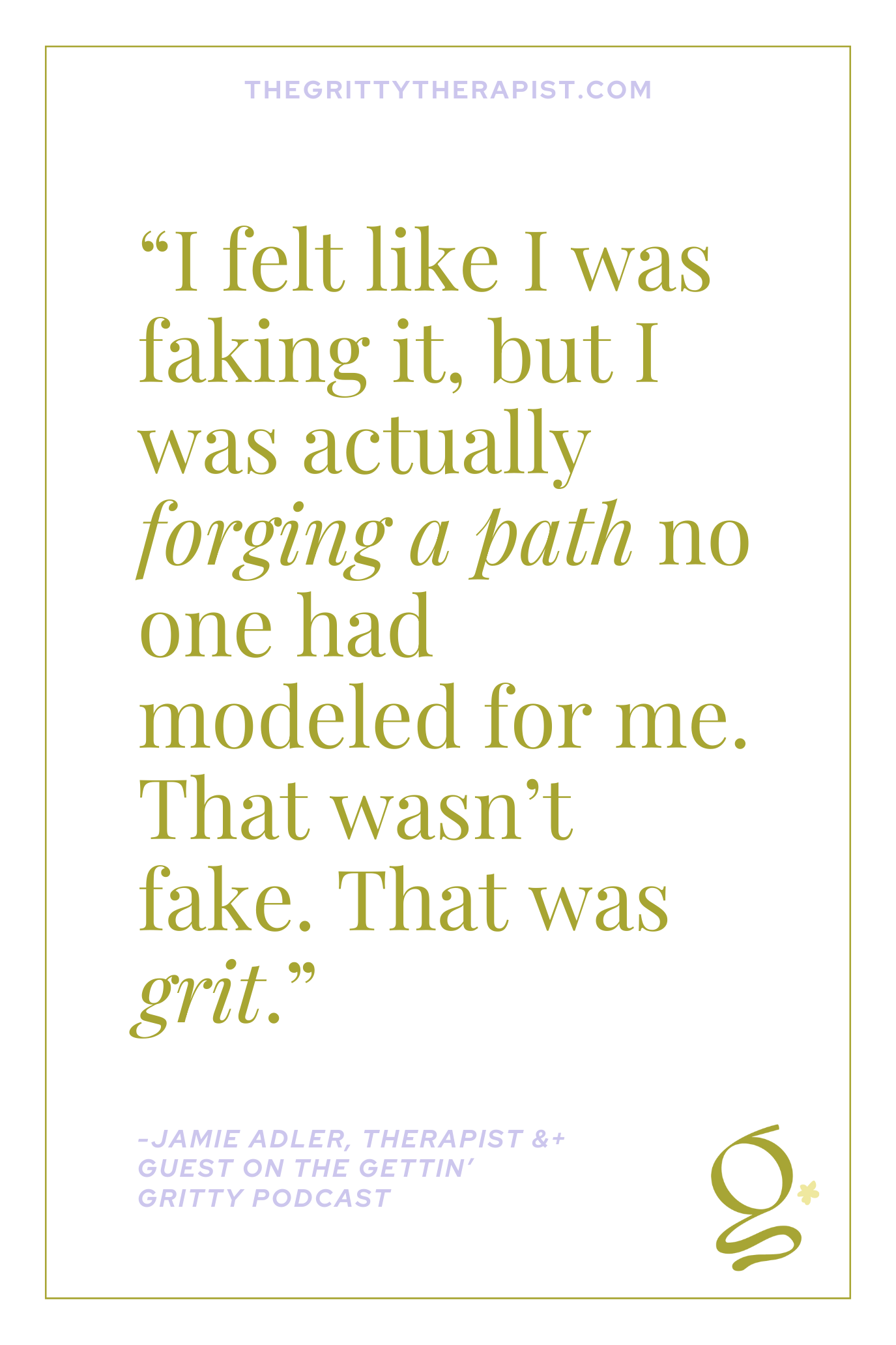
So I had to kind of “fake it till I make it.” I had to forge this path and I had no idea how I was going to do it or what I was going to do, but I did it. I didn’t know how at the time.
Stefanie Armstrong:
Did you feel like you were faking it?
Because do you know what my take on that is? That was not fake. That was grit.
Jamie Adler:
Okay, so that’s part of my story. That’s exactly it. That’s what drove me to do it. That’s what kept me going. “I’m going to act like I’m this person who belongs here, who can afford to be here.” That’s the story in itself. And I did it. It wasn’t like I completed college in four years. I changed my major. I was going to be a school counselor. I was going to teach home ec. That’s what I was going to do.
Stefanie Armstrong:
Really? I don’t think I knew that.
Jamie Adler:
I was going to become a school counselor — that’s what I wanted to do. But then they canceled my program. It was going to take longer, so I thought, “Okay…” But then I wanted a family. So I paused my studies, had a family, my husband finished his studies. Then I got back into it while I was pregnant, then I raised my family some more, went to grad school… and that’s kind of where I’m at today.
And that’s one of the things — I feel like in your previous podcast you talked about the Primal Question, right? “What’s yours?” And mine is: Am I wanted? That’s kind of where that comes in. I still sometimes feel like I’m faking it. Like, “Are they going to find out? Are they going to figure out I’m a fraud? How did I get here?” But no — I did actually go that route.
And I think what I’m trying to remind myself is this: You guys giving me the Fremont location, and running Fremont, and working with other therapists — all of that has really challenged me to continue recognizing: “No, I actually did that. I went that route. I did the work. I found out about your work in attachment and family systems. That’s what I wanted. I just never knew how to find it. And then I continued seeking it.”
Stefanie Armstrong:
Yeah. So about that “fake it till you make it” — that term is used a lot in our profession. I’ve heard it in other professions as well. And I guess after reading Atomic Habits and some of the different books, and then just the research and the experience that we’ve had, it’s like: You were never fake.
What you were doing was really real. And that’s how we came to this spot and started this podcast: because you had grit in that decision. “I could take this path, but I’m going to go this way.” So I totally understand what you’re saying you feel, but what I want to do is reframe that for you — that’s actually grit.
I remember sitting with you and I could see it. I could see the grit. I could hear it. And then the further you got — you know, day one is a little dicey and super nervous — but as you continued to grow as a provisional, that grit grew. You don’t always know what you’re doing; it’s more about naming it. You think it’s fake, but it’s not.
Jamie Adler:
Yeah. It almost makes me a little emotional to hear that — to think that that 18-year-old girl, you know? “You weren’t faking it. You did that. And it led you here.” It’s really sweet to hear that validated.
Stefanie Armstrong:
We did do that. It is very sweet. I think it is sweet to know that it may have felt fake, but it actually was real. That’s the cool part.
So Jamie, if you could talk a little bit about some pivotal things — as an intern or as a provisional — that were pivotal for you and helped you gain grit. Things that listeners might hear and think, “Oh my gosh, that was me,” or “I remember that happening.”
Jamie Adler:
Yeah, there are a couple that stand out. I don’t know if they’re necessarily humorous, but they’re meaningful.
One of my favorite ones — in the moment it wasn’t necessarily my favorite — happened in group consultation. I would come into group and I just wanted to be told what to do. “Just tell me what to do.” There was one moment where I said, “I just don’t know what to do. I’m still new. Just tell me what to do.”
Cathy, I remember you saying, “Yes, you do. You know what to do,” because you’re my cheerleader. And then, Stef, I remember you saying, “Well, no, you don’t. You’re a rookie. You are still new.” And I think in that moment, I got both pieces that were really helpful. I got encouragement and support — “I believe in you” — and I also got this challenge of, “Let’s be practical here.”
I remember that all the time. And I keep remembering something I heard at a conference from Dr. Avin: “Stop thinking about success versus failure — am I going to be successful or a failure? Stop that. Start thinking: Am I growing and learning?” I always want to be in that mindset — growing and learning. It’s okay where I’m at right now, and I’m probably doing better than I think, with room to grow. That was one of my favorite moments.
Stefanie Armstrong:
Thanks for sharing that. What’s the other one?
Jamie Adler:
The other one is from when I was a provisional. We had another intern, and I had just started — I think I’d only been a provisional for a couple of months. And I was like, “Surely I don’t have to have an intern in my office to watch me, because I’m not good at this.”
I remember she came in… and I turned off. I was not me. I feel like I kind of froze. I was performing for her instead of being with my client, because I wanted her to think, “You belong here. You get to be a therapist here.” It’s so funny because now with our interns I’m like, “Yeah, come on in. This is great.” I’m so comfortable with it now — but sometimes I cringe thinking about how scared I was.
Stefanie Armstrong:
But you know, the crazy thing is if you had never experienced that, then you wouldn’t be able to really experience where you are now. That is a grit-gaining experience — where we feel so unbelievably uncomfortable that we freeze — and then it just chips away and chips away. And then you’re like, “Now I’m like, yeah, come on in. Let’s go.”
To add onto that: both of us can identify feeling that way as well. But there is something about your nature — you can cringe now, but it was such a pivotal gritty moment. One of my favorite things about you is that you are willing to be vulnerable and uncomfortable and do it anyway. That truly, to me, is the definition of grit: “I don’t want to do this. I don’t like this. I don’t want them to make me do this… but I’m going to do it because I need to.” And that’s what you do.
Jamie Adler:
Yeah. That’s been one of my mindsets for a long time: I’m going to try to go outside of my comfort zone. I’m really good at avoiding. I’m really good at that. But I’m going to try. I’m just going to try it — what’s the worst that could happen?
And in that moment, I kind of forgot what it was like to be an intern, even though I had just been there. I’m sure that intern was also excited and wanted to learn, but also probably felt, “I have a presence in this room too.” It was a really good check of where we were at.
Stefanie Armstrong:
Yeah. So if you were sitting across from a brand-new intern who’s about to become a provisional, what advice would you give based on your reflection here? Because I know you’re doing this in Fremont, but for the audience — what would you say?
Jamie Adler:
I think a couple of things.
At The Cord, we talk about the four ingredients of secure attachment. I’m not going to go into all of those, but there’s this felt sense that we’re trying to achieve — felt safety with each other. So with that, we have to be open and vulnerable, but we also get to be playful and have fun with each other too.
So I think I’d remind people coming into this profession to have fun. Have fun, be vulnerable, be playful, repair. Invite rupture, because it’s going to happen. That’s actually where we really get to show, “Hey, I trust you enough that we’re going to go through this and then come back together and repair.” That’s probably one of the biggest lessons I repeat daily: rupture is going to happen. Don’t be afraid of it.
Stefanie Armstrong:
Yep. Rupture is going to happen. Don’t be afraid of it. And even if you are afraid of it, you can know it’s going to happen and bring that fear closer: “I know this is scary.”
Jamie Adler:
Yeah. And I’m going to get closer to you. I’m going to understand you more and vice versa. That’s how we grow in this profession. I even tell clients that I invite conflict in. Don’t shy away from me — that’s actually really important in this space too.
And then a big one for me: I protect my time. I always said I’m going to protect my time. Sometimes that can be a detriment where I protect my time too much and need to lean in more. But my time outside of the office — I really want that.
It’s hard. I can’t always say I leave the office and leave everything at work. That’s not always the case. But I really do try. In fact, I’ll get in my car — I still do this to this day — and I visualize myself shutting my office door and it being locked, and everything is safe and contained in there. Then I get to go home and be with my children and my husband, and I get to be friend, wife, mom — all that. That’s something I try to do intentionally.
I try to listen to music to separate that time. Even with emails and responding to texts, I really try to have a boundary there, because that’s why I’m doing this — my family. That’s why I’m doing this work. I’m also doing it because I love people; I love humans. But my people have to come first, and I want to model that.
Stefanie Armstrong:
Yeah. So I think, just in review:
Number one is have fun. Don’t be afraid to have fun.
Number two: invite rupture because it’s going to happen anyway, and talk about it openly.
And number three: really boundary your time in a way that’s healthy.
Jamie Adler:
Yeah. And I use that phrase “protect my time.” As a therapist, when I’m in the office, I want to protect my time there too. I’m here to serve you. I’m here to be a space. I’m providing a service to these people. I’m functioning under this practice; I have a responsibility there. I can’t bring all my stuff in.
And then, when I leave, I want to protect my time at home too. It’s not always easy to do, but I try to remind myself, “Jamie, protect your time.”
Stefanie Armstrong:
So let me ask you a quick follow-up question, because I’m over here thinking, “Yeah, that’s very hard to do.” I think of myself as a new clinician trying to navigate: What is my level of responsibility to my clients, and what is my level of responsibility or commitment to my family?
Newer therapists really struggle with that because this is not something that’s modeled well. We’ve had therapists here who are answering texts and phone calls at 10:30 or 11:00 at night. There’s that immediate feeling of, “Sorry, honey, I can’t go out to dinner with you because I have to take this call.”
I did that some. I did. And I think it’s a process of learning and having enough grit within yourself to say, “You know what? I know the work I’m doing with my client is good. I know my client is responding. And I’m going to help my client gain their own grit when they’re in the middle of a crisis, so they don’t become reliant on me.”
So when you say you protect your time, I can really hear that in you. We all worry about our clients occasionally, but you do have to have this protected mental time where you get to just know and have faith in your relationship with your client and the work you’ve done in helping them navigate their crises. Because that’s the job.
Jamie Adler:
I think to add to that: yeah, I’ve answered those phone calls. I’ve called you — both of you — in those, “What do I do?” moments.
Stefanie Armstrong:
Sure. Because sometimes we do have to respond. It’s discernment.
Jamie Adler:
Yeah. That’s where I feel the responsibility in this position as a therapist — to show up for my client in that time. But it’s also about empowering them:
“Use your resources. Okay, this is a crisis. What did you do? What did you do to manage it?”
“Well, I didn’t do anything. I called you.”
“Okay. Do something. Go manage it, and then let me know if that doesn’t work.”
I want them to utilize their resources, because I don’t want to be sitting at my son’s game and get a text — and now my mind is there, because I care about this person — and I’m trying to balance these two things I care deeply about.
So I’m really upfront with my clients: “When I clock out, I clock out. I may not look at my phone right away. I want to know that you have resources and a plan if I’m not available. I care about you — but my family is going to come first.” I’m also teaching them to protect their time as well.
Stefanie Armstrong:
Yep. It’s role modeling.
So Jamie, what are some negative thoughts or upsetting thoughts — we’re EMDR therapists, so we’re going to go there a bit — that you feel got in your way or you had to overcome as a new therapist?
Jamie Adler:
Yeah. I think it comes down to:
“Am I supposed to be here?”
“Am I qualified enough to be here?”
“Am I good enough to be here?”
In the beginning, that tripped me up in terms of not being as open and vulnerable. Yes, I would be like, “Help me, tell me.” But I wasn’t really asking as much as I could. I admire people who do. I think it prevented me from being really vulnerable sometimes.
That developed over time as I had a safe environment to do so and to flourish. But I was always wondering: “What are they going to think about me if I don’t know what to do? Am I going to ask the right question? I don’t even know what I am asking.” I think that hindered me a little bit in the beginning.
And it all comes back to that “Am I wanted?” feeling.
Stefanie Armstrong:
I was just going to say, it goes right back to your Primal Question — “Am I wanted?” “Am I real? Is this who I really am?” That’s like a younger part of self, that new “Jamie therapist” that we all have. Me as “Stef therapist” 3,000 years ago, Cathy as “Cathy therapist” 3,000 years ago, right?
So for people listening who’ve been in that position — your message is: ask questions, be vulnerable, don’t be afraid to speak up. Anything you’d add?
Jamie Adler:
I would say: get really comfortable with being uncomfortable. And find somebody.
I do a modality called RO-DBT for overcontrol — that’s me, personality-wise. We need to have a whole conversation on that someday.
In that model, you just need one person. When I started learning about RO-DBT, I kind of found my one person. “Okay, I’m going to come in. I know I’m going to feel uncomfortable. I don’t really know where I fit. I’m trying to figure this out. I want to be able to help people. But I’m going to find my one person that I can maybe let my guard down with in the office space or at the practice or through networking.”
And that person — I actually asked for mentorship. I went to this person (you guys know her, Chris Smith — she works at our practice), and I said, “Hey, would you mind being my onsite mentor? Would you do that?” That was a place where I let myself do something really uncomfortable by saying, “Hey, I want you to hold me accountable. I want you to call me out when I’m struggling.” She’s really good at that, in such a gentle way.
By allowing myself to have that, then I started to open up more with other people — with you guys.
Stefanie Armstrong:
It’s funny, because at The Cord right now we have a mentorship program — the Gritty Academy — with mentors, and you are one of our mentors. I’ve never heard you tell this story before, but you were actually creating a mentor program before we even created the mentor program. I was like, “Whoa, that’s so cool.”
Jamie Adler:
Yeah. I even think back to when we interviewed: one of the things on my list — because I have questions I’m going to ask you — was that I was looking for mentorship. I remember that being evident in that time.
Now Chris and I are friends. Now we’re friends. And I’m always going to be seeking mentorship. And now we’re running an RO-DBT group together.
Stefanie Armstrong:
Yes. All of that. I think that’s such a good point. Therapists who’ve been therapists for a few minutes and therapists who’ve been therapists for 20 years — we all need mentorship.
When I think about myself or you — we’ve been doing this for a long time — but I absolutely need mentorship. I need somebody to say, “Come on over. Let’s think about this again. Let’s redo this.”
To be a mental health therapist, it’s a continual, ongoing process. I think that’s important because newer therapists sometimes think: “So… when am I going to feel better? When am I going to feel real? When is this imposter syndrome going to go away?” Sometimes it doesn’t. And I think that speaks to grit, which is why we’re doing this podcast and why we’re inviting people like you on here — because you do have grit. And we know you will continue to be gritty in your journey.
That really means being uncomfortable with the uncomfortable.
Jamie Adler:
Yeah. Can I add to that? One of the things I also learned from mentorship with you two is: know your value. Yes, you’re always growing and learning, but I’ve heard you say multiple times, “Know your value. Don’t discredit yourself. There’s a reason why you’re here. You earned this. Value yourself.”
We need to present ourselves that way. Going into this mentorship role here has really thrown me into that — if I’m here, then I better believe I belong here. Otherwise the imposter part is the part that says, “You don’t belong.”
Stefanie Armstrong:
So there might be a therapist out there right now thinking, “I don’t know if I even have grit. How do I know? Do I have grit?” Jamie, what would you say to that therapist who’s second-guessing whether they have grit?
Jamie Adler:
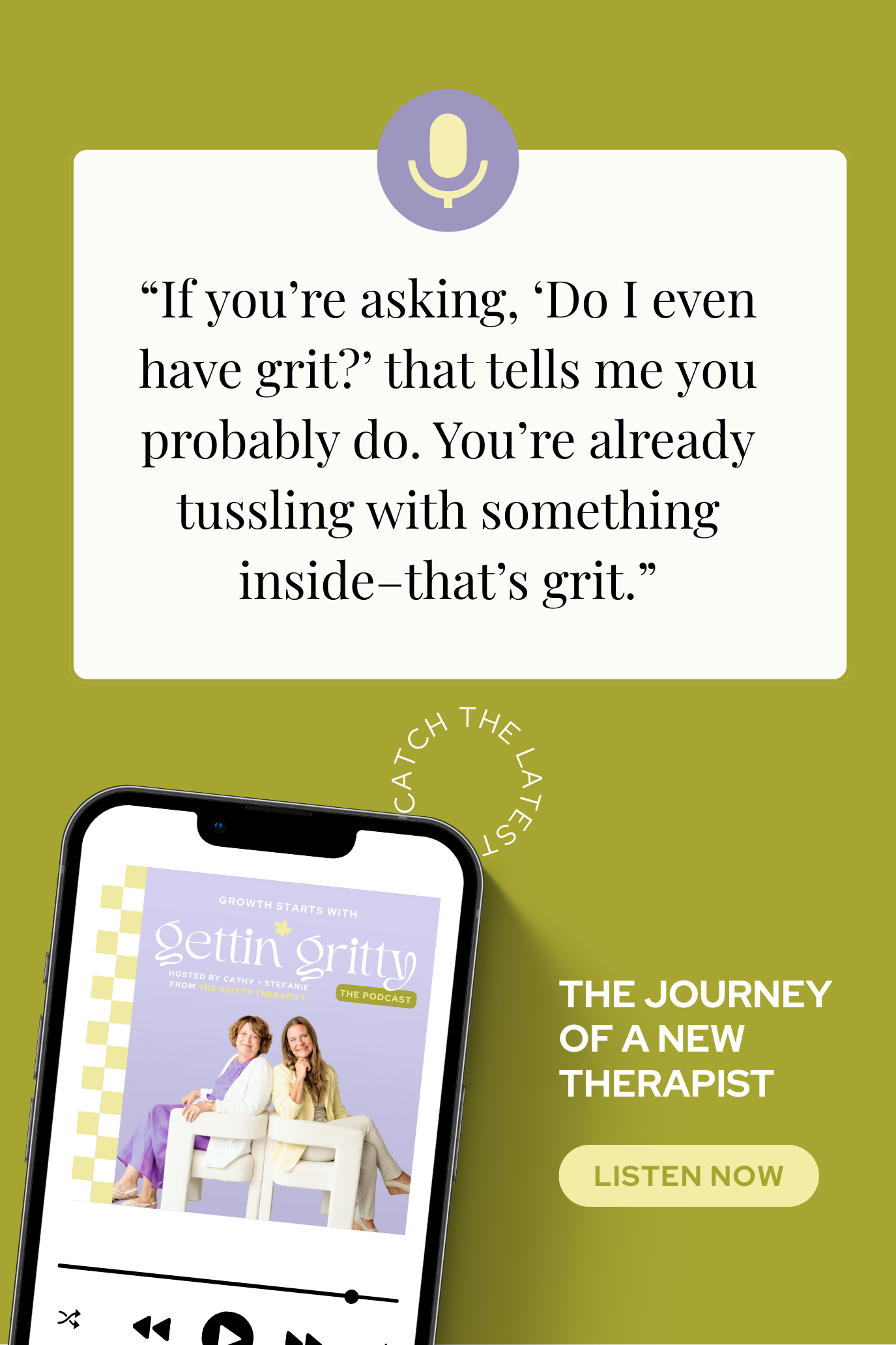
I might say: the fact that you’re asking that question shows that you might. If you’re pondering that, then you’re tussling with something. So I’d ask: Where do you want to be? Where do you want to go? How are you going to get there? What’s your drive? Because you’re already pondering it — and that shows grit in itself.
Stefanie Armstrong:
That shows grit.
So as we finish up, we wanted to ask: Is there a funniest story that you look back on and just laugh at now? Like, “My goodness, what the heck was I doing?”
Jamie Adler:
Okay. Well, I’ll have to come back to talk about RO-DBT because there are some of the silliest things I never would have dreamed I’d be doing — dancing around like a pirate in a group of people. I didn’t think that’s what being a therapist was.
But some of my favorite funny ones are from telehealth. I remember I had a whole session teaching someone how to double boil so they could make chocolate-covered fruit. That was one of my sessions. I was thinking, “Really? This is what I’m doing?” But it ended up being so valuable.
Or doing dishes on telehealth with somebody. They were doing dishes. And it worked. It was so valuable.
I think some of those off-the-cuff moments — where I’m not just sitting stiff in a chair, not that blank slate version we were taught to be — those are my favorites. I always tell my clients: we are imperfect humans being imperfect together.
Stefanie Armstrong:
That’s great. Those are great.
So Jamie, just let the listeners know where they can follow you on Instagram and all that.
Jamie Adler:
Yeah. I’ve been helping out a lot with The Cord’s social media, so you’ll see my face on there every once in a while. I do have a page called From Control to Connection. There’s not a whole lot on there right now, but that’s where Chris Smith and I hope to put some RO-DBT themed material. I’m hoping to add to that. That’s where you can find me — and then in Fremont, Nebraska, serving the community, families, and children with attachment trauma.
Stefanie Armstrong:
Yeah. So go follow Jamie on her page on Instagram, From Control to Connection, and obviously follow us on The Cord: Where Science Meets Connection — and The Gritty Therapist, of course.
Jamie, this has been so much fun. We love you.
Everybody, go gain some grit. We’ll see you later. Bye, everybody.
Jamie Adler:
It’s been so fun. I love when I get to see you guys. It’s such a blessing. So thanks for having me.
If You’re Craving the Same Growth Jamie Experienced…
If you’ve been nodding along with Jamie’s story thinking, “I want that… I want to feel grounded, supported, and actually confident in what I’m doing,” we want you to know something: you can.
Every ounce of grit Jamie carries didn’t come from magic—it came from learning, practicing, messing up, repairing, growing, and being willing to stay in the room.
And if you’re craving that same clarity, that same “Oh… I can do this” feeling in your own work, we’d love to walk with you through the very class that started it all.
Start here: Therapist AF.
It’s the class that gives you the foundation Jamie built her entire career on—attachment, regulation, clinical presence, and the confidence to trust yourself in the room.
Consider it your first step toward the gritty, grounded version of you that we already believe in.
You’re not behind.
You’re not alone.
And you’re absolutely capable of this.
Let’s keep growing your grit.
Let’s get gritty,
Stef + Cathy
Jamie Adler, LIMHP, LPC, is a therapist and site lead at The Cord’s Fremont, Nebraska location. She works primarily with children, teens, adults, and families navigating attachment trauma, overcontrol, and complex family systems. Jamie was one of our early interns at The Cord and has since grown into a trusted clinician, supervisor, and mentor for newer therapists. She is deeply passionate about helping therapists build grit, secure attachment, and realistic boundaries so they can do this work without losing themselves in the process. When she’s not in the therapy room, Jamie is usually with her family, practicing what she teaches: protecting her time, staying grounded, and choosing connection over perfection.